



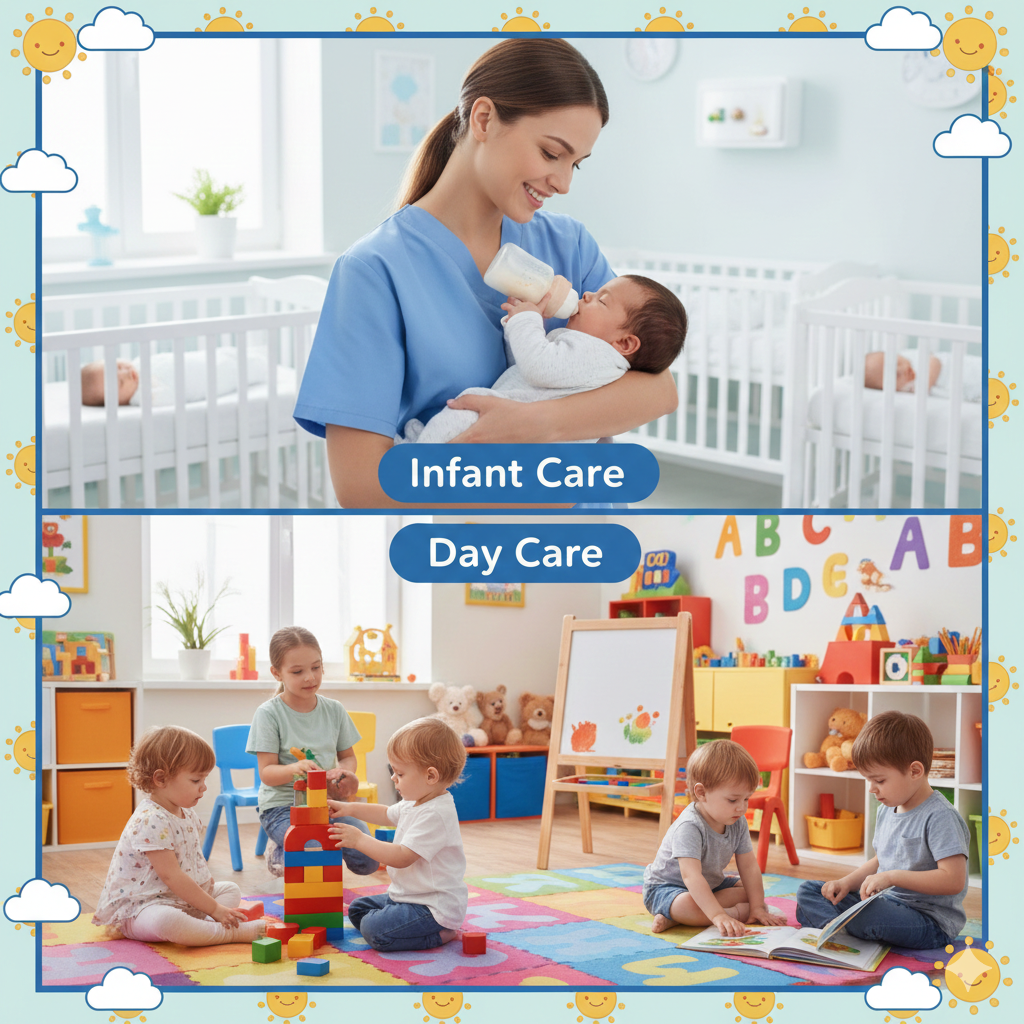
Best Infant Daycare Near Me: Choosing Safe, High-Quality Infant Care Close to Home
Finding the best infant daycare near me starts with knowing what matters most: safety, licensed care, and staff who understand infant development. Look for infant daycare centers with current licensing, low child-to-staff ratios, clear health and safety policies, and teachers trained in early childhood care—those factors most directly predict a reliable, nurturing environment for your baby.
You’ll want quick ways to compare local options, tour facilities, and ask targeted questions about feeding, sleep routines, and communication. This article guides you through how to choose a center, what to prioritize for your infant’s needs, and practical steps to evaluate each option so you can find the right fit with confidence.
Choosing the Best Infant Daycare Near Me
Look for clear, verifiable standards and experienced staff, plus a learning space designed for infants’ safety and development. Prioritize licensed programs, staff-to-infant ratios, emergency procedures, and a calm, clean environment with age-appropriate materials.
Essential Safety Standards for Infant Care
Check that the daycare holds a current license from your province or territory and that licensing information is visible or easy to verify online. Confirm the center’s staff-to-infant ratio; for example, many jurisdictions require no more than 1:3 or 1:4 for infants, and smaller groups reduce risk and improve care.
Ask to see written policies for immunizations, illness exclusion, medication administration, and safe sleep (back-sleeping, individual sleep spaces, no loose bedding). Inspect physical safety: secured entry points, covered electrical outlets, bolted furniture, and visible fire and evacuation plans. Verify staff conduct background checks and have up-to-date CPR/First Aid certification tailored to infants.
Qualified Caregivers and Staff Training
You should meet primary caregivers and confirm their qualifications: early childhood education credentials, infant-specific training, and ongoing professional development. Prefer caregivers with coursework or certificates in infant development, feeding, and behavior, plus experience handling reflux, allergies, or sensory needs.
Ask how the center manages staff turnover and continuity of care; consistent caregivers support attachment and development. Request the staff-to-infant assignment plan so you know who your child will see daily. Check for documented training on diapering hygiene, choking prevention, and administering emergency medications (e.g., epinephrine), and note whether training records are available for parent review.
Classroom Environment and Learning Materials
Inspect the infant room for natural light, clean floors, and distinct zones for sleeping, feeding, and play. Cribs or cots should meet current safety standards and be spaced to avoid crowding; portable playpens should be used sparingly and only when supervised.
Look for age-appropriate, non-toxic toys that are large enough to avoid choking, washable, and rotated regularly. Materials should support sensorimotor growth: soft blocks, high-contrast books, safe mirrors, and varied textures. Observe how caregivers use materials—do they interact, sing, and respond to cues? Note surface cleaning routines, diapering stations separated from play areas, and clear policies for toy sanitation after illness.
Parent Considerations for Infant Daycare
Choose places that fit your daily routine, match your safety standards, and keep you connected to your child’s day. Prioritize proximity, transparent enrollment steps, and communication styles that suit how you work and relax.
Location and Accessibility Factors
You want daycare within a reliable commute—ideally 15–25 minutes from home or work during peak traffic. Check drive time at drop-off/pick-up hours and have a backup route for closures or childcare emergencies.
Confirm parking availability, stroller access, and whether the entrance is secure and well-lit. Ask if the facility serves your neighborhood for emergency pickup and whether they accept late drop-offs or early arrivals if your schedule varies.
Consider public transit access if you rely on buses or trains. If you expect to visit during the day, ensure the center has visitor policies that allow parent observations and quick access in an emergency.
Enrollment Process and Waitlist Tips
Request the center’s full enrollment packet and timeline so you know required forms, health records, and start dates. Complete immunization records and a signed emergency contact sheet early to avoid administrative delays.
Ask about waitlist procedures: whether spots are offered by age group, date of application, or priority (siblings or employee families). Get placed on multiple lists and note any deposit or holding fee and its refund terms.
Schedule a provisional tour and ask the director how often openings occur. If possible, secure a spot by agreeing to a start window and keeping communication lines open—call monthly for updates if you remain on the waitlist.
Communication Between Parents and Providers
Decide which communication methods work for you: daily written reports, a mobile app with photos and logs, or face-to-face chats at pickup. Request examples of daily reports so you know what feeding, sleep, and activity details you’ll receive.
Clarify how staff handle incidents and when they will call you—immediately for injuries and within the same day for minor issues. Ask who your point person is and how substitutions are communicated when primary caregivers are absent.
Set expectations about caregiving philosophies and consistency in routines. Request regular check-ins—weekly or biweekly—and a written plan for developmental goals so you stay involved in your child’s progress.
