



Harvest Cannabis in 2026: A Complete Guide to Growing, Timing, and Maximizing Quality
Harvesting cannabis is far more than simply cutting down plants when they look ready. It is a critical stage that directly impacts potency, flavor, aroma, and overall quality. Many growers spend months carefully nurturing their plants, only to lose potential quality due to poor harvesting decisions. Learning how to harvest cannabis properly ensures that all your effort pays off in the final product.
Whether you are growing cannabis indoors or outdoors, the harvesting process requires patience, observation, and attention to detail. From identifying the perfect harvest window to drying and curing correctly, each step contributes to the final experience. In this guide, you will learn everything needed to confidently harvest cannabis like an experienced grower.
Understanding Why Harvest Cannabis Timing Matters More Than You Think
Timing is the most important factor when you harvest cannabis. Harvest too early, and your buds will lack potency and depth of flavor. Harvest too late, and you risk losing THC while increasing sedative effects.
Cannabis plants go through several stages, and the final flowering phase is where cannabinoid production peaks. During this time, trichomes—the tiny resin glands on buds—change in color and structure. These changes signal when the plant is at its optimal point for harvest.
A properly timed harvest cannabis process ensures:
- Maximum THC or CBD levels
- Balanced terpene profile
- Better aroma and taste
- Higher-quality final product
Missing this window by even a few days can significantly affect the outcome, especially for premium-grade cannabis.
How to Identify the Perfect Time to Harvest Cannabis Plants
Observing Trichomes for Accurate Harvest Timing
Trichomes are the most reliable indicator when deciding to harvest cannabis. These tiny, crystal-like structures contain cannabinoids and terpenes.
- Clear trichomes indicate the plant is not ready
- Milky white trichomes show peak THC levels
- Amber trichomes suggest THC is degrading into CBN
For most growers, the ideal moment to harvest cannabis is when about 70–90% of trichomes are milky, with a small percentage turning amber. This balance delivers both potency and a pleasant effect profile.
Checking Pistils as a Secondary Indicator
Pistils are the hair-like structures on buds that change color as the plant matures. Initially white, they gradually turn orange, brown, or red.
When around 70–80% of pistils have darkened and curled inward, the plant is typically close to harvest. However, pistils are less reliable than trichomes, so they should only be used as a supporting sign.
Environmental Factors That Influence When to Harvest Cannabis
The timing of your harvest cannabis process is also influenced by environmental conditions. Factors such as temperature, humidity, and light cycles all play a role in plant maturity.
Indoor growers often have more control, allowing them to fine-tune harvest timing. Outdoor growers, on the other hand, must consider weather conditions. Rain, frost, or excessive humidity can damage buds and force early harvesting.
For example, if heavy rain is expected, it may be better to harvest cannabis slightly early rather than risk mold or bud rot. This decision requires balancing quality with protection.
Preparing Properly Before You Harvest Cannabis Plants
Preparation is essential before starting the harvest cannabis process. Having the right tools and setup will make the process smoother and reduce stress on both the plant and the grower.
You should prepare:
- Sharp trimming scissors
- Gloves to handle sticky resin
- Drying racks or hanging lines
- Clean workspace with good airflow
It is also important to stop feeding nutrients about 1–2 weeks before harvest. This process, often called flushing, helps remove excess nutrients from the plant, resulting in cleaner-tasting buds.
The Step-by-Step Process to Harvest Cannabis Efficiently
Cutting Down the Plants
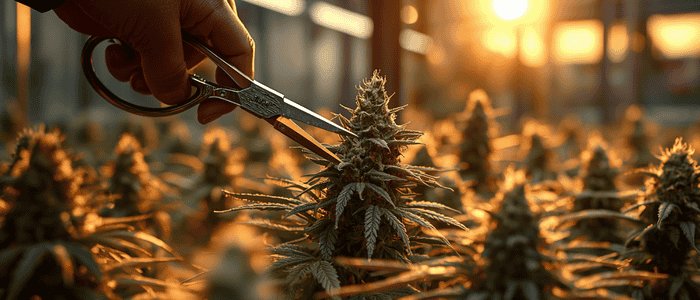
Once your plants are ready, begin the harvest cannabis process by cutting them at the base or removing branches individually. Some growers prefer harvesting entire plants, while others cut branches for easier handling.
Cutting in the early morning or just before lights turn on can help preserve terpenes, as cooler temperatures reduce evaporation.
Removing Fan Leaves
Fan leaves are the large leaves that do not contain much resin. Removing them during harvest cannabis makes trimming easier and improves airflow during drying.
Wet Trimming vs Dry Trimming
Wet trimming involves trimming buds immediately after cutting, while dry trimming is done after the plant has dried.
Wet trimming advantages:
- Easier to handle
- Faster drying
Dry trimming advantages:
- Better flavor retention
- Slower, more controlled drying
Choosing between these methods depends on your environment and personal preference.
Drying Cannabis Properly After Harvest
Drying is a crucial phase that begins immediately after you harvest cannabis. Improper drying can ruin even the best-grown plants.
The ideal drying conditions include:
- Temperature around 18–22°C
- Humidity between 50–60%
- Good air circulation without direct airflow on buds
Hang branches upside down or place buds on drying racks. Drying usually takes 7–14 days. Buds are ready when stems snap instead of bending.
Rushing this stage can trap moisture inside buds, leading to mold and poor taste.
Curing Cannabis for Maximum Flavor and Potency
After drying, curing begins. This is where cannabis reaches its full potential in terms of aroma, smoothness, and potency.
Place dried buds in airtight glass jars and store them in a cool, dark place. During the first week, open the jars daily for a few minutes to release moisture. This process is known as “burping.”
Curing can last anywhere from 2 weeks to several months. The longer you cure, the smoother and more refined the final product becomes.
Proper curing after you harvest cannabis enhances:
- Terpene preservation
- Smooth smoking experience
- Overall quality
Common Mistakes to Avoid When You Harvest Cannabis
Even experienced growers can make mistakes during the harvest cannabis stage. Avoiding these errors can significantly improve your results.
Harvesting too early is one of the most common issues. This leads to underdeveloped buds with lower potency. On the other hand, waiting too long can reduce THC levels and alter the effects.
Another mistake is improper drying conditions. High humidity can cause mold, while very low humidity can dry buds too quickly, affecting taste.
Handling buds roughly during harvest cannabis can also damage trichomes, reducing quality. Always handle plants gently and minimize unnecessary contact.
Indoor vs Outdoor Harvest Cannabis Techniques
Indoor growers typically have more control over their harvest cannabis process. They can manipulate light cycles, humidity, and temperature to achieve optimal results.
Outdoor growers face more challenges, including weather changes and pests. However, outdoor cannabis often benefits from natural sunlight, which can enhance terpene development.
Indoor harvesting usually happens in a controlled environment, while outdoor harvesting may require flexibility based on weather conditions.
Tips to Increase Yield Before You Harvest Cannabis
Maximizing yield is a goal for most growers. While genetics play a major role, certain practices can help improve results before you harvest cannabis.
Training techniques such as topping, low-stress training, and pruning can increase bud production. Ensuring proper nutrients during flowering also supports larger yields.
Lighting is another key factor. High-quality light exposure leads to denser buds and better overall plant health.
Even small adjustments can make a noticeable difference by the time you harvest cannabis.
The Role of Genetics in Harvest Cannabis Quality
Not all cannabis plants are the same. Genetics determine growth patterns, flowering time, and final quality.
Some strains are naturally faster to harvest cannabis, while others require longer flowering periods. Indica strains typically mature faster, while sativa strains may take several additional weeks.
Understanding your plant’s genetics helps you plan your harvest cannabis timeline more accurately and avoid guesswork.
How Weather Impacts Outdoor Harvest Cannabis Decisions
Outdoor growers must pay close attention to weather forecasts. Rain and humidity can cause bud rot, which can quickly destroy crops.
In regions with unpredictable climates, growers may choose to harvest cannabis slightly earlier to avoid losses. Wind, temperature drops, and pests can also influence harvest timing.
Using protective measures such as covering plants or improving airflow can help reduce risks during the final stages.
Post-Harvest Storage Tips to Maintain Cannabis Quality
After curing, proper storage is essential. Even perfectly harvested cannabis can degrade if stored incorrectly.
Keep your cannabis in:
- Airtight containers
- Cool, dark environments
- Stable humidity levels
Avoid exposure to light and heat, as these can break down cannabinoids and terpenes over time.
Maintaining proper storage ensures that the effort you put into harvest cannabis is preserved for as long as possible.
Advanced Techniques for Expert-Level Harvest Cannabis Results
Experienced growers often use advanced techniques to refine their harvest cannabis process. These include staggered harvesting, where different parts of the plant are harvested at different times based on maturity.
Another method is dark period harvesting, where plants are kept in darkness for 24–48 hours before cutting. Some growers believe this increases resin production, although results can vary.
Monitoring trichomes daily during the final week allows for precise timing, ensuring optimal results.
Why Patience Is the Key to Successful Harvest Cannabis
Patience plays a major role in harvesting cannabis. Many beginners feel tempted to harvest early, especially after waiting for months. However, waiting just a few extra days can significantly improve quality.
Observing plants closely and resisting the urge to rush the process leads to better results. Each stage, from harvesting to curing, requires time and attention.
The difference between average and premium cannabis often comes down to patience during the final stages.
Conclusion: Mastering the Harvest Cannabis Process for Superior Results
Learning how to harvest cannabis properly is one of the most valuable skills for any grower. It is the stage where all your hard work finally comes together, and even small mistakes can impact the final outcome.
By understanding the importance of timing, observing trichomes, and following proper drying and curing methods, you can consistently produce high-quality cannabis. Every step—from preparation to storage—plays a role in shaping the final product.
With experience, you will develop a deeper understanding of your plants and refine your harvest cannabis process over time. The more attention you give to detail, the better your results will become.
In the end, successful cannabis harvesting is not just about cutting plants—it is about preserving quality, enhancing flavor, and achieving the best possible outcome from your grow.
