



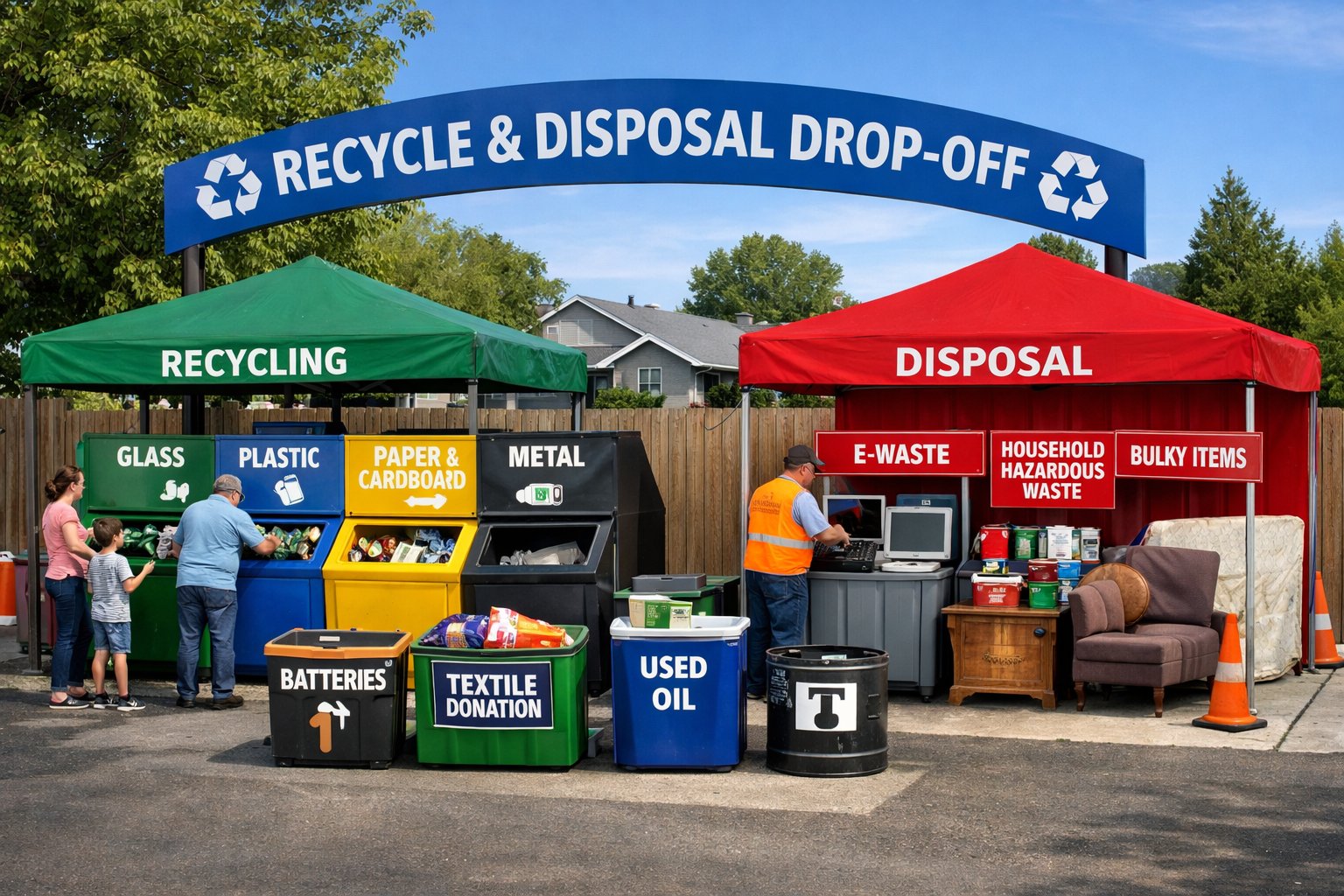
how to recycle near me: Local Drop-Offs, Curbside Rules, and Responsible Options
You can find nearby recycling options quickly by using local drop-off maps and recycling locators or by checking municipal and retailer programs for specific items. Use a recycling near me locator or your city’s waste website to pinpoint centers, drop-off points, and TerraCycle-style programs that accept hard-to-recycle items.
In this article how to recycle near me Once you know where to go, you can sort materials by type—paper, plastics, glass, metals, electronics, batteries, and hazardous items—and follow each facility’s rules so your items actually get recycled. The rest of the article walks you through finding centers near you and which materials each location typically accepts so you can drop off the right items with confidence.
Finding Local Recycling Centers
Locate specific drop-off points, facility hours, and accepted materials before you go. Use maps, municipal sites, and apps to confirm restrictions like hazardous waste rules, appointment requirements, or fees.
How to Use Online Maps and Searches
Enter your full address or ZIP code into map services like Google Maps or dedicated directories such as Earth911 and TerraCycle drop-off maps. Search phrases that work well: “recycling center near [your ZIP]” or “electronics recycling [city name].”
Look for keywords in listings: “accepts batteries,” “e-waste,” “household hazardous waste,” or “drop-off only.” Those terms tell you whether a facility handles the item you need to recycle.
Check business profiles for hours, phone numbers, and recent user photos. Call ahead if the listing lacks clear accepted-materials info or notes “appointment required.” Save the facility to your map app for directions and to avoid the wrong stop.
Checking Municipal and County Services
Visit your city or county’s official solid waste or public works webpage for the most accurate rules and schedules. Municipal pages list curbside guidelines, material-specific drop-off events, and seasonal bulky-item or hazardous-waste collections.
Look for pages titled “recycling guide,” “drop-off locations,” or “special waste collection.” Those pages often include downloadable PDFs with what can and cannot be accepted.
If you live in a multi-jurisdiction area, confirm the facility accepts residents from your municipality; some county sites restrict services to locals or require ID. Note any fees, proof-of-residency rules, and appointment systems before you travel.
Mobile Apps for Recycling Locations
Download apps like Earth911, Recycling Registry, or TerraCycle’s locator to search by material type and distance. Filter results by “electronics,” “plastics,” “textiles,” or “batteries” to avoid visiting a center that won’t accept your items.
Use built-in features to view contact details, operating hours, and user-submitted notes. Many apps let you save favorite centers and get directions compatible with your phone’s map app.
Turn on notifications where available to learn about local drop-off events or temporary collection drives. Always verify an app listing with a quick phone call, since smaller drop-off points change hours and accepted materials more often.
Types of Materials Accepted Near You
You can typically drop off everyday packaging, electronics, and specialized items at different local facilities. Hours, accepted items, and any fees vary by depot, so check your local drop-off map or municipal page before you go.
Household Recyclables
You should place glass bottles, metal cans, paper, and most plastic containers in your Blue Box or municipal curbside recycling where available. Items usually accepted curbside: clean paper (newspapers, mail, cardboard), rigid plastic containers (bottles, tubs, jugs — check the number), aluminum and steel cans, and glass bottles and jars. Rinse containers to reduce contamination and flatten cardboard to save space.
Do not include greasy pizza boxes, plastic bags, or loose film plastic in curbside bins unless your program explicitly accepts them. Those items often need separate drop-off (grocery bag return points) or go to landfill. When in doubt, consult your community-specific recycling page for exact preparation rules.
Electronics and Hazardous Waste
Electronics, batteries, paint, and household chemicals generally cannot go in curbside bins and require drop-off depots or retailer take-back programs. Typical accepted items at hazardous waste depots: single-use and rechargeable batteries, fluorescent and LED light bulbs, leftover paint, solvents, motor oil, and small electronics like phones and laptops. Many depots accept these for free; some larger items or quantities may incur a fee.
Prepare electronics by removing personal data and, if requested, separating batteries. Transport liquids (paint, chemicals) in sealed original containers and keep them upright. Check depot hours and any quantity limits before visiting.
Specialty Item Drop-Offs
Certain items need designated collection points: tires, bulky metal, mattresses, and election signs in some municipalities. For example, some cities offer seasonal drop-off events for bulky waste and separate recycling for wooden or metal sign stakes. Retail take-back programs may handle lightbulbs, propane tanks, and small appliances.
Find specialty drop-off options by searching your postal code on the provincial “Where to Recycle” map or municipal drop-off guides. Note any preparation rules—remove wooden stakes from signs, separate screws and metal supports, or deflate and bundle tires—to ensure acceptance and reduce handling time.
